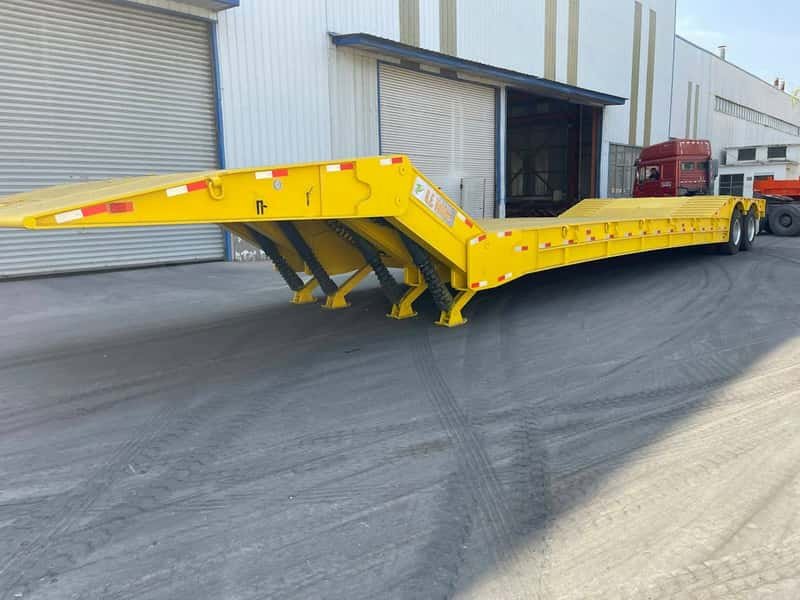
What ships on a flatbed
Open-deck trailers, including expedited and same-day flatbed freight on a hotshot deck when a load cannot wait, carry the freight that can't go through a dock door: anything loaded by forklift from the side, by crane from above, or too long or awkward for an enclosed van. Typical open-deck loads include:
- Steel and metals: coil, plate, beams, rebar, angle and structural members.
- Pipe and tubing: steel, ductile iron, PVC and HDPE, bundled or on racks.
- Lumber and building materials: dimensional lumber, trusses, roofing, block and drywall.
- Machinery and equipment: industrial machines, compressors, generators and crated components.
- Solar racking: steel posts, torque tubes and mounting hardware headed to project sites.
Flatbed or step-deck?
The deciding factor is usually height. Most states set legal overall height around 13'6", and a standard flatbed deck sits about 5 feet up, so freight taller than roughly 8'6" pushes the load over. A step-deck drops the main deck low enough that freight up to about 10 feet tall can usually move without a height permit.
| 48' / 53' flatbed | Step-deck | |
|---|---|---|
| Approx. legal freight height | About 8'6" | About 10' on the lower deck |
| Loading | Side, top or end, full length usable | Side or top; ramps on some trailers help with rolling equipment |
| Best for | Steel, pipe, lumber, long bundles | Taller machinery, equipment, stacked crates |
| Watch out for | Height limits on tall freight | Shorter usable lower-deck length |
Exact limits vary by trailer and by state, so the decision should be made against your actual dimensions rather than a chart.
For machines and equipment, the cost guides show sourced price ranges: cost to ship a mini excavator, skid steer and generator.
Securement and tarping
On an open deck, the load is only as safe as its securement. Federal cargo securement rules set minimum tie-down counts and working load limits based on the weight and length of the freight, and specific rules apply to commodities like coil, pipe and machinery. What that means for you as a shipper:
- Know whether the freight is bundled, crated, on skids or loose, and where the lift and tie-down points are.
- Flag anything that can be scratched or crushed by chains, so edge protection or straps can be planned.
- Say whether the load needs tarps (lumber, finished steel, electrical gear) and whether a specific tarp type is required.
- Note any dunnage the shipper supplies, such as blocking or 4x4s between layers.
Jobsite deliveries and unloading
Construction sites, solar farms and plant expansions are where open-deck freight gets complicated. There may be no dock, no forklift until the crew arrives, soft ground, or a gate that closes at 3 p.m. Unloading is the receiver's responsibility on a flatbed, so before dispatch these should be confirmed:
- What equipment will unload the truck (forklift, telehandler or crane) and that it can handle the heaviest piece.
- An on-site contact name and phone number, plus site hours and delivery instructions.
- Whether the truck can physically reach the drop point: road access, turning room and ground conditions.
- Any site safety requirements for the driver, such as hard hat, vest or check-in.
If the receiver isn't ready when the truck arrives, detention starts. Spelling this out in advance is the single biggest thing that keeps a flatbed load on budget.
Oversize freight
Loads wider than 8'6", taller than legal height or heavier than legal axle weights are oversize or overweight. They need state permits and may need escort vehicles, specific travel times or route surveys. Oversize is always a case-by-case question: exact dimensions, weight and photos decide whether a load is routine or a permit move, and what the permit process involves.
What an open-deck quote depends on
| Detail | Why it matters |
|---|---|
| Length, width and height of each piece | Decides flatbed vs. step-deck and whether permits apply |
| Weight per piece and total | Sets axle loading and the right equipment |
| Commodity and packaging | Drives securement method and tarping |
| Loading and unloading method | Confirms side, top or end access at both ends |
| Site contact and hours | Avoids a truck waiting at a closed gate |
Our free Open-Deck Load Prep Sheet puts all of this on one page. Or tell us about your freight and we'll contact you the day we open.