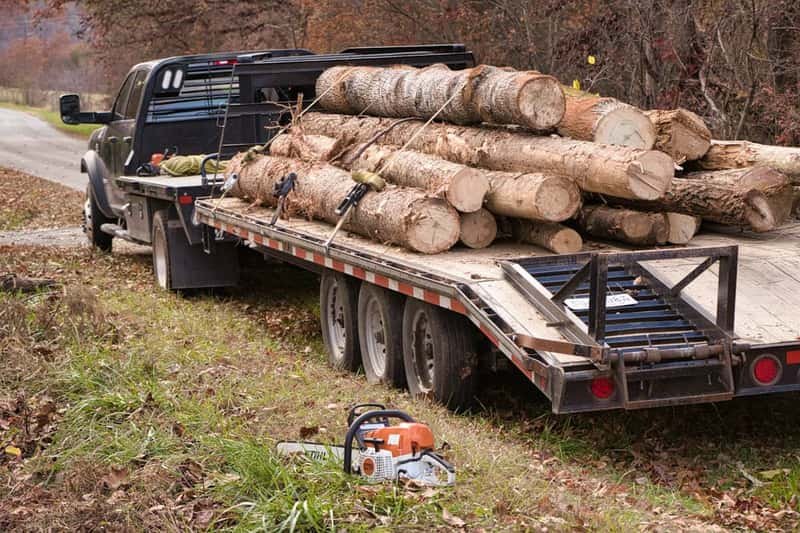
Electric motors, switchgear sections and transformers are some of the most common freight on a hotshot deck. They are heavy for their size, expensive, often needed at a jobsite on a fixed date, and almost never too long for a 40-foot trailer. This page is the cost companion to our guide to preparing motors and switchgear for an open deck. It collects the 2026 price ranges that named public sources publish, labels each one as carrier pay or shipper price, and shows how weight, height, the number of pieces and the delivery site push a price toward the top or the bottom of its range.
What you are shipping: weights by piece
Price follows weight and handling more than horsepower or kVA. Manufacturers publish the numbers that matter, and the table collects examples we opened on October 18, 2026. Motor figures are Baldor's listed ship weights; switchgear and transformer figures are the publishers' approximate weights.
| Piece | Example and source | Weight | Size | What it means for the truck |
|---|---|---|---|---|
| 50 HP motor | Baldor EM4115T: 1,775 rpm, 326T frame, TEFC | 640 lb | 30.28 in overall length | Pallet-size crate; a partial or LTL candidate |
| 100 HP motor | Baldor EM4400T: 1,785 rpm, 405T, TEFC | 1,203 lb | 38.19 in long | Under typical liftgate ratings; LTL is possible |
| 150 HP motor, six-pole | Baldor EM44156T-4: 1,190 rpm, 447T, TEFC | 2,571 lb | 48.24 in long | At a liftgate's limit; plan a forklift at both ends |
| 200 HP motor, six-pole | Baldor EM44206T-4: 1,190 rpm, 449T, TEFC | 3,017 lb | 53.24 in long | Open deck, forklift or crane at both ends |
| 300 HP motor, four-pole | Baldor EM44304T-4: 1,780 rpm, 449T, TEFC | 2,888 lb | 53.24 in long | Open deck, forklift or crane at both ends |
| Switchgear section, typical | Warp switchgear shipping guide (page © 2026, undated) | 800–2,500 lb per section | Commonly 90 in tall, 36 in wide, 30–60 in deep | Top-heavy, ships upright; too tall for a van past about 92 in |
| Medium-voltage metal-clad section | Schneider Electric Masterclad FAQ (modified Aug 10, 2026) | 2,100 lb unit; 2,500 lb average (2,900 lb at 63 kA) | Circuit breakers listed separately at 380–800 lb each | Outdoor non-walk-in enclosures add 595–1,123 lb per unit |
| 300 kVA padmount transformer | Maddox Transformer, approximate | 4,056 lb; 196 gal of fluid | 59 in high × 51.5 wide × 54.5 deep | Fits a non-CDL hotshot alone |
| 500 kVA padmount transformer | Maddox Transformer, approximate | 5,023 lb; 210 gal | 59 × 59.5 × 60.5 in | Fits a non-CDL hotshot alone |
| 750 kVA padmount transformer | Maddox Transformer, approximate | 7,664 lb; 358 gal | 73 × 65 × 60.5 in | At the edge of non-CDL payload; usually a CDL hotshot or flatbed |
Four things to take from the table:
- Speed matters as much as horsepower. In the same 449T frame, Baldor's six-pole 200 HP motor lists 3,017 lb against 2,888 lb for the four-pole 300 HP. Describe a motor by frame, speed and enclosure, or better, send the data sheet, then add the crate. Baldor's figure is a ship weight; a heavier crate built for open-deck travel adds to it, so weigh the finished crate.
- Switchgear breakers are their own line. Schneider lists the circuit breakers separately at 380–800 lb each. If they travel in their own crates they are separate articles with their own tie-downs; if they stay racked in, the section's weight rises. Check the shipping list before you give a weight.
- Liquid-filled transformers are dense. A 750 kVA padmount at 7,664 lb before its skid is close to a non-CDL hotshot's payload, which our hotshot page puts at roughly 8,000–10,000 lb and Beardown Logistics (Feb 2026) at 9,000–11,000 lb. FreightCenter's transformer shipping page (updated Aug 3, 2026) advises confirming whether an oil-filled unit has special requirements before pickup.
- Nothing here is long. No footprint in the table is much over 5 ft (the largest, the 750 kVA padmount, is 65 × 60.5 in), so deck length almost never limits these loads. Weight, height and the unloading equipment do.
Partial deck or the whole deck
Three thresholds decide whether a piece goes LTL, shares a hotshot deck, or takes a whole truck:
- The liftgate rating. Warp's switchgear guide puts standard liftgates at around 2,500 to 3,000 lb. Motors up to about 100 HP sit well under that, so a crated motor on a skid can ride LTL when each end has a dock or a liftgate. A liftgate on an 870 lb LTL shipment lists at $75–$274 across 12 carriers' tariffs (GetLTLRates, Sept 24, 2026, shipper list price); freight accessorial charges covers limited-access and other site fees. An open deck has no liftgate at all, which is covered below.
- Height. Warp says switchgear taller than roughly 92 inches needs a flatbed or heavy-haul carrier rather than a van. A 90-inch section on a 6-inch skid is already past it.
- Payload. A non-CDL hotshot carries roughly 8,000–10,000 lb (our hotshot page) or 9,000–11,000 lb (Beardown, Feb 2026); a CDL hotshot up to 16,500 lb (Beardown; FreightRun's gooseneck benchmark uses the same ceiling). Several heavy pieces run out of payload long before they run out of deck.
| Shipment | Usual fit |
|---|---|
| One 50–100 HP motor, crated, dock or forklift at both ends | LTL, or a hotshot partial if it is urgent or the site cannot take an LTL delivery |
| One 150–300 HP motor (about 2,600–3,300 lb crated) | Hotshot partial or exclusive; forklift at both ends |
| One switchgear section | Open deck, partial or exclusive; upright, tarped or shrink-wrapped |
| Two motors and a section, about 7,100 lb (the diagram below) | An exclusive non-CDL hotshot, after checking the truck's actual payload |
| A 750 kVA padmount, or a multi-section lineup | CDL hotshot, or a flatbed or step-deck |
A partial is priced as a share of the truck, by the linear feet or pieces you occupy, plus the cost of your stop and above a minimum. We did not find a dated public source that publishes 2026 partial hotshot rates, so we do not print one; the partial hotshot page explains the mechanics. An exclusive deck makes sense when the pieces add up to most of the payload, when the delivery date cannot move, or when the jobsite needs the truck to wait for a crane.
The counts come straight from 49 CFR 393.110(b), which applies when nothing blocks an article from moving forward: one tiedown for an article 5 ft or shorter weighing 1,100 lb or less; two for an article 5 ft or shorter over 1,100 lb, or longer than 5 ft up to 10 ft; two plus one for each additional 10 ft or fraction beyond that. An article blocked against forward movement needs one per 10 ft of length or fraction (393.110(c)). 49 CFR 393.106(d) then requires the working load limits to add up to at least half the article's weight, counting a tiedown from the deck to the cargo at half its rated limit and one that passes over the cargo to the opposite side at its full limit. A small point with a practical edge: a 50 HP motor crate under 5 ft and 1,100 lb legally needs only one tiedown, but one strap lets it rotate, so drivers use two. The preparation guide covers marking the center of gravity and the tie-down points that make this quick at the dock.
Cost by distance (2026)
These are the ranges the sources publish, applied to a representative distance in each band so the totals are comparable. The multiplication is ours; the per-mile figures are theirs. Every figure is labelled shipper-side or carrier pay, and none is copied from DAT's rate tables, which DAT's terms do not allow us to republish. The ranges assume an exclusive hotshot carrying crated, legal-size electrical equipment with a forklift at both ends.
| Distance | Shipper-side, exclusive hotshot (source, date) | Carrier-pay reference | What usually decides it |
|---|---|---|---|
| Under 100 mi | Priced as a flat minimum, shipper-side and carrier pay (dated figures in Hotshot rates explained). | See the minimums section of that guide; no per-mile figure applies. | The minimum, and how long the truck waits for a forklift or a crane at each end. |
| 100–250 mi (200 mi shown) | FreightRun (2026 benchmarks): gooseneck $2.00–$3.00/mi, so $400–$600. Short-run minimums can apply at the short end. | FreightWaves (May 18, 2026): most loads $1.50–$2.00/mi, so $300–$400. | Where per-mile pricing meets the minimum; deadhead to your dock. |
| 250–500 mi (400 mi shown) | FreightRun: $800–$1,200. Beardown: $1.50–$3.00/mi, so $600–$1,200. | FreightWaves: $600–$800. O Trucking: expedited $2.00–$3.50/mi, so $800–$1,400. | Same-day versus next-morning delivery, and the receiver's hours. |
| 500–1,000 mi (750 mi shown) | FreightRun: $1,500–$2,250. Beardown: $1,125–$2,250. | FreightWaves: $1,125–$1,500. | A second driver day, and whether a tarp has to stay on overnight. |
| 1,000–2,500 mi (1,500 mi shown) | Beardown: $2,250–$4,500. Expect the lower half: FreightRun notes longer routes often lower the per-mile rate. | FreightWaves: $2,250–$3,000. | Fuel, three to four driver days, and freight available near the destination. |
| Over 2,500 mi (2,700 mi shown) | Beardown: long hauls over 2,500 mi average about $1.00–$1.50/mi, so $2,700–$4,050. | No separate long-haul figure in the carrier-side sources we opened. | Five to six days of hours-of-service clock; winter routing. |
Transit follows the driver's clock: 49 CFR 395.3 allows 11 hours of driving inside a 14-hour window, and this site plans on about 450 loaded miles a day; our nationwide hotshot page has transit bands. For how a hotshot price is built line by line, see hotshot rates explained; the same method applied to other jobsite equipment is on the generator and mini excavator cost pages.
Minimums for short runs
A truck sells days, not miles, so a short plant-to-jobsite move is priced as a flat minimum rather than per mile. The dated minimums that public sources publish, shipper-side and carrier pay, and the per-mile equivalent of a flat minimum at different distances, are printed once in Hotshot rates explained. What this page adds is why electrical gear stretches the day the minimum pays for: the driver's deadhead to your dock, loading three pieces, securing and tarping, the drive, and waiting for the receiver's telehandler. Electrical gear makes the waiting part worse than most freight, because a crane or a rigging crew often has its own schedule. Ask for the free time and the hourly detention rate to be stated before you book.
What changes the price
- Crating. A crate or skid with fork entry from the sides lets the piece come off an open deck with an ordinary forklift. A motor bolted to a pallet that only takes forks from one end may need the truck repositioned or a crane, and that time is priced.
- Orientation and height. Switchgear and most transformers must ride upright. On a hotshot deck about 3 ft off the ground a 96-inch section on its skid stands about 11 ft; on a standard flatbed about 5 ft up it stands about 13 ft, 6 in under the common 13 ft 6 in state limit (FHWA's Size Regulations report puts most state limits between 13 ft 6 in and 14 ft). Upright, tall freight narrows the trailer choice, and fewer qualifying trucks means a higher price.
- Tilt and shock indicators. They cost little and change behavior at both docks; they also tell the receiver to inspect before signing. They do not change the trailer, but an indicator that trips because the piece was laid down to fit a lower deck is the most expensive outcome on this list.
- No liftgate on a deck. Hotshot and flatbed trailers have no liftgate. Delivery needs a forklift rated for the weight at the forks' load center, a telehandler or a crane. A residential-style site with none of these points toward LTL with a liftgate for a light motor (under the 2,500–3,000 lb liftgate rating Warp cites) or a rigging service for anything heavier.
- Jobsite delivery. Gate check-in, site safety orientation, gravel or mud, a tight turn for a 60-foot combination, overhead lines near the unloading area: each adds time. A substation or data center site with a named contact, a delivery window and a forklift on standby is the base case the ranges above assume.
- Weather protection. Electrical enclosures need shrink-wrap and usually a tarp on an open deck. Beardown (Feb 10, 2026) lists tarping at $100–$200 plus the driver's labor.
- Weight near the payload line. A load that only a CDL hotshot can take has fewer trucks bidding on it. A load of 7,100 lb fits most non-CDL units; 9,500 lb fits only some.
- Declared value. A switchgear lineup or a large motor can be worth more than a carrier's standard cargo coverage. State the value up front so any extra coverage is settled before booking, not after a claim.
- Fuel and timing. EIA's survey puts U.S. on-highway diesel at $6.276 per gallon for the week of October 19, 2026 (regional figures are in Hotshot rates explained). Expedited hotshot prices above standard in every source that splits it out, which is the premium a line-down emergency pays over a flexible pickup.
Worked example (illustrative arithmetic on published ranges; not a price)
The load: the three pieces in the diagram: a crated 100 HP motor (1,300 lb), a crated 300 HP motor (3,100 lb) and a switchgear section on its skid (2,700 lb), 7,100 lb in all, from a motor shop in Houston to a data center jobsite in the Dallas area, about 240 loaded miles. Forklift at pickup; the site's telehandler unloads; the section is shrink-wrapped and needs a tarp. The nearest suitable truck is assumed to be 60 miles from the pickup. The table multiplies cited per-mile ranges by the miles; Averstone Logistics does not quote shipments.
| Line | Figure | Basis |
|---|---|---|
| Truck | Non-CDL hotshot, if its plated payload is 8,000 lb or more | 7,100 lb against the roughly 8,000–10,000 lb non-CDL planning range (our hotshot page) or 9,000–11,000 lb (Beardown, Feb 2026) |
| Shipper-facing benchmark times miles | $480–$720 | FreightRun gooseneck $2.00–$3.00/mi × 240 mi (2026 benchmarks) |
| Cross-check | $360–$720 | Beardown $1.50–$3.00/mi × 240 mi (Feb 10, 2026); a flat short-run minimum can sit above the bottom of this range |
| Carrier-pay reference | $360–$480 to the truck | FreightWaves $1.50–$2.00/mi × 240 mi (May 18, 2026) |
| Tarp | + $100–$200 | Beardown, Feb 10, 2026 |
| FreightRun product plus Beardown tarp range | $580–$920 | $480–$720 + $100–$200: a sum of two cited ranges, shown only so the pieces add up |
| Fuel inside that price | About $197 | 300 total mi ÷ an assumed 9 mpg towing = 33.3 gal × $5.903, EIA Gulf Coast average, regional table for the week of October 19, 2026 |
| Tie-downs | 6 minimum, 8 used | 2 + 2 + 2 under 49 CFR 393.110(b); the section gets 4 |
| Transit | Same day if loaded by about 9 a.m. | About 6 hours of driving inside the 11-hour limit (49 CFR 395.3); the 240-mile loaded leg is about 5 hours |
Reading it: fuel alone is about 21% of the top of the summed range and 34% of the bottom ($197 of $920 and of $580), which is why a total far below the carrier-pay reference for this move deserves a question. The working load limits check out with room to spare: two 4-inch straps tagged 5,400 lb over each motor crate count at their full rating, 10,800 lb against the 650 lb and 1,550 lb required; the switchgear skid's four 3/8 in Grade 70 chains (6,600 lb working load limit each under 49 CFR 393.108) run from the deck to the skid, so each counts at half, 3,300 lb: 4 × 3,300 = 13,200 lb against 1,350 lb required. Add a fourth piece like another 100 HP motor and the load reaches 8,400 lb, past the low end of non-CDL payload, and the right truck becomes a CDL hotshot. A site that receives only until 3 p.m. leaves little slack for a 9 a.m. load; miss the window and the delivery becomes next morning.
Where these numbers come from
The ranges above are not a rate quote and were not built by us. We opened four public pages that publish hotshot pricing in 2026 (Beardown Logistics, FreightRun, FreightWaves and O Trucking), kept only dated figures, and labelled each as what the shipper pays or what the truck is paid. FreightWaves and O Trucking write for drivers and owner-operators, so their figures are carrier pay, the amount after any intermediary's margin; Beardown and FreightRun write for shippers. The equipment weights come from manufacturer and seller pages (Baldor, Schneider Electric, Maddox Transformer) and a logistics platform's shipping guide (Warp). These are commercial sites with an interest in the business, which is one more reason to describe the load precisely and compare like with like.
For the direction of the open-deck market, C.H. Robinson's October 1, 2026 update describes flatbed linehaul rates as down modestly since mid-August while all-in rates rose with diesel, and names data center construction and energy investment among the demand drivers, which is the same project work that moves switchgear and transformers. DAT Trendlines publishes a free weekly flatbed snapshot, and our Freight Market Pulse summarizes what moved each week.
Where this applies
Hotshot and flatbed freight nationwide (lower 48). Dry van truckload across North Carolina, South Carolina, Georgia, Virginia, Florida, Alabama and Tennessee. USA only — no cross-border, no drayage, no rail, no temperature-controlled freight. Motors, switchgear and transformers moving from a plant, a motor shop or a distributor to a jobsite anywhere in the lower 48 are in scope for the day our registration is active; see industrial and electrical freight for the wider picture. Have pieces like these coming up? Tell us about your freight, with the crated weights, dimensions and both ZIP codes. We answer every message within 30 minutes, Mon–Fri 8am–5pm ET, and within 6–12 hours at other times.
Related guides and tools
Run your own ZIP codes in the hotshot estimator, see how the number is built in hotshot rates explained, and read how hotshot shipping works. For other equipment, see the cost to ship a skid steer, cost to ship a generator and cost to ship a mini excavator guides.