What this page covers
Hotshot and flatbed freight nationwide (lower 48). Dry van truckload across North Carolina, South Carolina, Georgia, Virginia, Florida, Alabama and Tennessee. USA only — no cross-border, no drayage, no rail, no temperature-controlled freight.
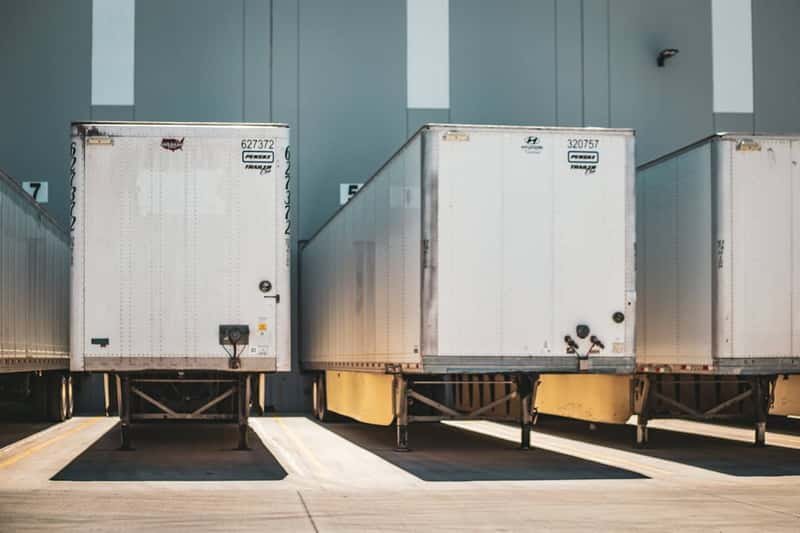
For dry van, that means a 53-foot enclosed trailer that picks up and delivers inside those seven states. You might need to ship a full truckload from Savannah to Atlanta, move a dry van truckload from the Carolinas to Florida, send a plant's output from Chattanooga to a Charlotte DC, or run store replenishment from Richmond into North Carolina. All of those are in scope. A van load from Atlanta to Chicago is not.
The dry van overview covers the trailer, pallet counts and dock basics. This page is about geography: which ports and interstates the freight runs on, how each state's market differs, which direction pays, and how long a load takes once federal hours-of-service rules are applied.
Seven states, seven different freight markets
Interstate figures below come from FHWA's Route Log, which lists each route's mileage state by state as of January 2026. Flow figures come from BTS's Freight Analysis Framework (FAF6), which estimates truck tonnage and value between every pair of states for its 2022 base year; we pulled them with the FAF6 Data Tabulation Tool (total flows, truck mode).
Georgia: the Port of Savannah and the Atlanta ring
Savannah's container traffic sets the rhythm for much of Georgia's van freight, and most of it leaves the port by truck. Georgia Ports Authority reports 5.67 million TEUs (twenty-foot container units) for fiscal 2026, July 2025 through June 2026, just under the prior year's 5.7 million. Rail carried 541,405 containers, 17% of the total, and the rest moved by truck (GPA, July 28, 2026). In October, GPA put the daily figure at about 15,000 truck gate moves and announced its permit for a 3.5-million-TEU Savannah Container Terminal on Hutchison Island, with construction scheduled to start in January 2028 (GPA, October 14, 2026).
Atlanta is the other end of most Georgia lanes, and its interchanges are the slowest truck miles in the region. The American Transportation Research Institute's 2026 list ranks I-285 at I-85 (north) third in the nation, I-75 at I-285 (north) fifth, I-20 at I-285 (west) sixth and I-75 at McDonough tenth (ATRI, February 17, 2026). Between the two sits I-16, which FHWA lists at 165.71 miles, all of it in Georgia.
For a van load: the Savannah–Atlanta corridor guide works through the 247-mile run hour by hour, including where the time goes at each end.
North Carolina: three metros on I-85 and I-40
North Carolina's van freight runs through Charlotte, the Piedmont Triad (Greensboro, Winston-Salem, High Point) and the Raleigh–Durham area. FHWA lists 420.06 miles of I-40 in the state, 181.37 of I-95 and 105.47 of I-77, plus 203.97 miles of I-85 of its own; the 31.51 miles where I-40 and I-85 share one roadway between Greensboro and Hillsborough are counted under I-40. Charlotte sits where I-85 crosses I-77.
Some of Charlotte's import freight arrives by rail rather than by road: GPA's Mason Mega Rail terminal runs 42 double-stack trains a week to inland points that include Charlotte, Atlanta, Nashville, Memphis and Orlando (GPA, January 27, 2026). Southbound, the Carolinas-to-Florida lane is large: in FAF6, North Carolina is second only to Georgia among the seven states as a source of truck freight into Florida by value, about $30.7 billion in 2022.
Seasonality: the High Point Market, the home-furnishings trade show with more than 11.5 million square feet of showrooms, runs October 17–21, 2026 and April 10–14, 2027 (High Point Market). Plan for crowded streets and docks in High Point's showroom district during market weeks.
South Carolina: Charleston, I-26 and the Upstate
Charleston's harbor was deepened from 45 to 52 feet, completed in December 2022, which the Army describes as the deepest port on the East Coast (U.S. Army, March 3, 2023). I-26 carries that freight inland: FHWA lists 220.90 miles of it in South Carolina, from Charleston through Columbia to Spartanburg, plus 106.28 miles of I-85 across the Upstate, 198.76 of I-95 and 91.05 of I-77 between Columbia and the North Carolina line.
The Upstate is automotive country. BMW describes its Spartanburg plant as the largest BMW Group plant in the world, building more than 1,500 vehicles a day as of its February 2023 export release (BMW Group). Much of the parts and packaging freight that feeds a plant that size moves in enclosed vans along I-85.
For a van load: Columbia–Charlotte is a 92-mile I-77 lane where the docks, not the drive, set the schedule, and Savannah–Charlotte crosses the state on I-95, I-26 and I-77.
Virginia: Hampton Roads, I-64 and I-81
Norfolk International Terminals, the Port of Virginia's largest terminal, is slated for 3.6 million TEUs of annual capacity once its ongoing expansion is complete, and has direct access to I-64; Virginia International Gateway adds 2.2 million (Port of Virginia). The port also moves containers about 200 miles inland by rail to the Virginia Inland Port at Front Royal, which serves the Washington and Baltimore markets, and by barge up the James River to Richmond Marine Terminal.
Virginia carries more of I-81 than any other state, 324.92 miles according to FHWA, while its share of I-85 is short: 69.12 miles from Petersburg to the North Carolina line. I-95 runs 178.25 miles through Richmond, and I-64 runs 267.31 miles from Hampton Roads west, not counting the 30.40 miles it shares with I-81 (FHWA).
For a van load: Virginia freight bound for the Carolinas and Georgia usually picks up I-85 at Petersburg or I-95 south of Richmond. From Norfolk, the first stretch toward Charlotte is on US highways before I-85, which is why that 326-mile lane plans as a next-morning delivery.
Florida: a destination market and a backhaul origin
Florida takes in far more by truck than it ships. FAF6 puts truck freight into Florida from other states at about 72.5 million tons worth $299.8 billion in 2022, against about 55.9 million tons worth $166.4 billion going out. The section below covers what that does to price.
FHWA lists 470.74 miles of I-75 in Florida, more than in any other state on that route, along with 381.93 miles of I-95, 362.02 of I-10, which ends at Jacksonville, and 131.89 of I-4 linking Tampa, Lakeland and Orlando. Jacksonville, where I-10 meets I-95, is the first Florida metro on both routes and the base of JAXPORT's terminals.
Seasonality: the Atlantic hurricane season runs June 1 to November 30, and the National Hurricane Center puts the peak around September 10, with most activity from mid-August to mid-October (NHC climatology). Florida and coastal loads in that window need slack in the schedule and a plan for a receiver that closes.
Alabama: Mobile, I-65 and a time-zone change
Mobile's channel has been deepened to 50 feet, which the Alabama Port Authority says makes it the deepest container port on the U.S. Gulf. A new 1,300-foot berth at the APM Terminals container terminal is planned to lift annual capacity to 1.4 million TEUs, with construction expected to begin in 2026 and finish 24 months after groundbreaking (Alabama Port Authority, October 28, 2025).
I-65 is the state's spine: FHWA lists 366.09 miles in Alabama, from Mobile through Montgomery and Birmingham toward Nashville. I-85 ends at Montgomery after 80.17 Alabama miles, and I-20 runs 84.89 miles of its own from Birmingham to the Georgia line; west of Birmingham it shares the road with I-59, which is where FHWA counts that stretch. In FAF6, Georgia trucked 14.7 million tons into Alabama in 2022, more than into any other neighboring state, and Alabama sent 10.7 million tons back.
For a van load: Alabama runs on Central time. A load from Atlanta to Birmingham arrives with an extra hour on the receiver's clock; Mobile to Atlanta loses one, which matters for a late-afternoon appointment.
Tennessee: I-40 end to end, and Nashville's bottleneck
Tennessee has the longest stretch of I-40 of any state, 455.44 miles from Memphis through Nashville to Knoxville, plus 120.13 miles of I-65 (FHWA), and I-75 through Chattanooga and Knoxville. Nashville's I-24/I-40 interchange at I-440 (east) ranks seventh on ATRI's 2026 truck bottleneck list.
Memphis and Nashville are both on GPA's Mason Mega Rail network, so some Savannah imports reach Tennessee by rail before the last miles by van. Truck freight between Tennessee and Florida leans south: in FAF6, Tennessee trucked about 2.2 million tons, worth $11.1 billion, into Florida in 2022, nearly twice the 1.2 million tons Florida sent back.
For a van load: Middle and West Tennessee are on Central time, East Tennessee on Eastern. Atlanta to Nashville, about 249 miles, can deliver the same afternoon; Memphis is about 381 miles from Atlanta on I-20 and I-22.
Headhaul and backhaul: why direction changes the price
The strongest pricing pattern in Southeast dry van is direction. Trucks run loaded into Florida and then look for freight to bring back. FAF6 (2022, total flows by truck) puts numbers on it:
| Flow by truck, 2022 | Tons | Value |
|---|---|---|
| Other states into Florida | 72.5 million | $299.8 billion |
| Florida out to other states | 55.9 million | $166.4 billion |
| Georgia into Florida | 13.8 million | $38.9 billion |
| Florida into Georgia | 14.3 million | $24.5 billion |
Look at the last two rows. Tonnage across the Georgia line is nearly even, but value runs about 1.6 to 1 into Florida. Tonnage counts every kind of truck, including dump and tank trucks hauling heavy, low-value material; value is the better hint for packaged, palletized freight, and by value the flow runs clearly south.
The spot market shows the same direction week to week. DAT's free weekly Dry Van Report lists its top ten outbound origin regions with each region's average spot rate; in the October 13, 2026 edition, Florida–South Georgia's rate slipped from the week before and was the lowest of the ten. We link to DAT and describe direction only; the figures are DAT's to publish.
What it means for your loads
- Shipping into Florida (Carolinas to Florida, Atlanta to Orlando): the rate carries part of the carrier's trip back north. Flexible pickup days and a firm delivery appointment make a load easier to fit into a truck's week.
- Shipping out of Florida or South Georgia: you are the backhaul. Trucks are usually easier to find than in the reverse direction, but they are wherever their last delivery left them, often Central Florida rather than your dock, so give a pickup window rather than a single hour where you can.
- Freight in both directions: a shipper with northbound and southbound volume can present the lanes as a pair. Our recurring lanes page explains what a useful lane schedule includes.
Transit expectations between Southeast metros
These are planning estimates for one solo driver, a legal-weight load and an early pickup, built the same way as the corridor guides:
- Miles: driving routes from the OSRM routing engine on OpenStreetMap data, city center to city center, retrieved October 18, 2026. The three corridor lanes use the endpoints stated on their own pages. Truck routes can run a few miles longer.
- Drive time: miles divided by a 50 mph planning average.
- Hours of service: under 49 CFR 395.3, a driver may drive up to 11 hours after 10 consecutive hours off duty (395.3(a)(1) and (a)(3)(i)), may not drive after 14 consecutive hours after coming on duty following those 10 hours off (395.3(a)(2)), and may not drive once more than 8 hours of driving time have passed without a consecutive 30-minute interruption in driving status (395.3(a)(3)(ii)).
- Dock time: about 2 hours to load and 2 to unload, both inside the same 14-hour window when delivery is the same day.
| Lane | Miles | Main roads | Drive at 50 mph | Planning delivery | Hours-of-service note |
|---|---|---|---|---|---|
| Columbia, SC → Charlotte, NC | 92 | I-77 | 1.8 h | Same day | Both docks and the drive use about 6 hours of the 14-hour window. |
| Savannah, GA → Jacksonville, FL | 139 | I-95 | 2.8 h | Same day | Even a noon pickup leaves room for an afternoon appointment. |
| Atlanta, GA → Birmingham, AL | 146 | I-20 | 2.9 h | Same day | The receiver's clock is an hour earlier: Birmingham is on Central time. |
| Charleston, SC → Charlotte, NC | 207 | I-26, I-77 | 4.1 h | Same day | Load by late morning for an afternoon slot. |
| Charlotte, NC → Atlanta, GA | 244 | I-85 | 4.9 h | Same day if loaded by about 10 a.m. | Arrives through I-285 at I-85 (north), third on ATRI's 2026 bottleneck list. |
| Savannah, GA → Atlanta, GA | 247 | I-16, I-75 | 4.9 h | Same day if loaded by about 10 a.m. | Later pickups book the next morning; the truck stages overnight. |
| Atlanta, GA → Nashville, TN | 249 | I-75, I-24 | 5.0 h | Same day | Gains an hour westbound, then meets the I-24/I-40 bottleneck. |
| Savannah, GA → Charlotte, NC | 250 | I-95, I-26, I-77 | 5.0 h | Same day if loaded by about 10 a.m. | Three interstates, one driving shift. |
| Charleston, SC → Atlanta, GA | 301 | I-26, I-20 | 6.0 h | Next morning (same day only with a dawn load) | 2 h + 6 h + 2 h is 10 of the 14 hours, if every dock runs on time. |
| Norfolk, VA → Charlotte, NC | 326 | US routes, then I-85 | 6.5 h | Next morning | The first stretch is on US highways before I-85. |
| Mobile, AL → Atlanta, GA | 328 | I-65, I-85 | 6.6 h | Next morning | Loses an hour eastbound, from Central to Eastern time. |
| Atlanta, GA → Jacksonville, FL | 345 | I-75, I-10 | 6.9 h | Next morning | Same day needs a dawn load and a receiver open into the evening. |
| Atlanta, GA → Memphis, TN | 381 | I-20, I-22 | 7.6 h | Next morning | The hour gained westbound can make a late-afternoon slot workable. |
| Atlanta, GA → Orlando, FL | 437 | I-75, Florida's Turnpike | 8.7 h | Next morning | Fits the 14 hours only if both docks run on time and the receiver takes a 5 p.m. slot. |
| Charlotte, NC → Orlando, FL | 523 | I-77, I-26, I-95, I-4 | 10.5 h | Day 2, first appointment | The driving fits under 11 hours; the driving plus two docks does not. |
| Richmond, VA → Atlanta, GA | 531 | I-85 | 10.6 h | Day 2, first appointment | Nearly all I-85, with the same overnight pattern. |
| Atlanta, GA → Miami, FL | 661 | I-75, Florida's Turnpike | 13.2 h | Day 2, morning | More than 11 driving hours, so one 10-hour break falls mid-route. |
| Charlotte, NC → Miami, FL | 727 | I-77, I-26, I-95 | 14.5 h | Day 2, late morning (day 3 if loaded after midday) | About 550 miles on day 1, the rest after the 10-hour break. |
Any lane over 8 hours of driving also needs a 30-minute interruption in driving (395.3(a)(3)(ii)), included in the planning column.
The pattern: under about 300 miles, the pickup time decides same day versus next morning. Between about 300 and 450 miles, plan on the next morning. Past about 500 miles, the delivery day is set by the 14-hour window, and a late pickup mostly changes how far the truck gets before its 10-hour break. A reverse lane takes the same time but does not price the same, for the reasons in the section above.
Worked example (illustrative)
22 pallets of bottled laundry detergent, 48"×40", single-stacked, about 37,400 lbs, from a plant near Charlotte to a retail DC near Orlando: 523 miles on I-77, I-26, I-95 and I-4. The DC has given a Wednesday 6:30 a.m. delivery appointment. Not a quote.
| Time | What happens | Clock |
|---|---|---|
| Tue 6:30 a.m. | Driver comes on duty after 10 hours off. The 14-hour window now closes at 8:30 p.m. (395.3(a)(2)). | 0 h driven |
| 7:00–8:45 a.m. | Check-in and live load. 22 pallets fill 22 of the 26 floor positions, about 44 feet of the trailer. | 0 h |
| 9:00 a.m. | Rolling: I-77 south to Columbia, I-26 east to I-95, then south past Savannah. | 0 h |
| 5:00 p.m. | About 400 miles in, south of Jacksonville. 8 hours of driving, so the 30-minute break is due (395.3(a)(3)(ii)). | 8 h |
| 5:30–8:00 p.m. | Last 123 miles to the Orlando area. Parks near the DC with 30 minutes left in the window. | 10.5 h |
| Wed 6:00 a.m. | Back on duty after 10 hours off (395.3(a)(1)); at the DC gate for the 6:30 a.m. appointment. | Delivered |
Now add a two-hour delay at the plant. Loading finishes at 10:45 a.m. instead of 8:45. The 14-hour window still closes at 8:30 p.m., because it started when the driver came on duty. The truck reaches 8 hours of driving at 7:00 p.m., takes its break, and has one more hour before the window shuts, about 450 miles in and some 73 miles short. The driver can't restart until 6:30 a.m. Wednesday, so the truck reaches the DC around 8:00 a.m. and misses the 6:30 appointment. On a 500-mile lane, detention at the shipper becomes a missed appointment at the receiver, which is why loading time belongs in the request.
Pricing direction: the truck is empty in Central Florida on Wednesday morning, inside the region that had the lowest outbound spot rate in DAT's report that week. That return trip is part of what a Charlotte–Orlando rate covers. A shipper with freight going from Florida back to the Carolinas can offer both legs together.
What a complete Southeast dry van request includes
The basics on the dry van page still apply. On Southeast lanes, a request is complete when it also answers these:
- Both addresses with ZIP codes and the facility type: plant, port-area transload, retail or grocery DC, or store. Note the time zone if the lane crosses into Central time (Alabama and Middle or West Tennessee).
- Ready date and time, plus the earliest pickup appointment you can offer. On a 250-mile lane, that time decides same day or next morning.
- The delivery appointment, who books it (you, the receiver or the carrier) and the PO or reference numbers the receiver will check. Our retail DC delivery guide covers the usual receiver rules.
- Pallet count, footprint and height, and whether the freight stacks. The pallet and linear-feet calculator turns that into trailer space.
- Total weight, since dense freight often reaches a van's legal weight before it fills the floor.
- For import freight: the container number, the transload or DC where it will be unloaded, and the date it will be ready in a van. The port leg itself is drayage and is not included.
- Loading and unloading terms: live or drop, typical dock time, and who pays a lumper or unloading fee at the DC. Our guide to accessorial charges explains detention, layover and TONU.
- Seal, paperwork and labeling requirements at either end.
- Any return freight, especially from Florida or South Georgia heading north, and how often the lane repeats.
- Hurricane-season flexibility for June through November loads: whether the delivery can move a day, and who decides.
Don't have all of it yet? Send what you know and we'll ask for the rest when we contact you. The free quote-ready checklist puts these details on one page, or tell us about your freight.
Market context (dated snapshot, reviewed October 22, 2026)
- Spot market direction, two dated DAT reports. DAT's free weekly Dry Van Report published October 13, 2026 (week ending October 10) had national dry van spot rates up from the week before and above a year earlier, with load posts sharply lower and truck posts higher. Among its top ten outbound regions, the Southeast and the Carolinas edged up, and Florida–South Georgia slipped and was the lowest of the ten. The report published October 19 (week ending October 17) had the national rate essentially unchanged, a fraction lower, and the Southeast, the Carolinas, Florida–South Georgia and the Lower Atlantic regions all slightly lower. Later weeks are summarised in the Freight Market Pulse; for weekly charts, see DAT Trendlines. Direction only; the numbers are DAT's.
- Freight flows. The figures here use BTS's newest benchmark, FAF6, released in July 2026 on a 2022 base year (FAF5.7.1 carries annual estimates through 2024; the corridors index uses those). Florida's truck inflow exceeded its outflow by about 30% by weight and about 80% by value in that year.
- Ports. Savannah closed fiscal 2026 at 5.67 million TEUs, slightly below fiscal 2025, with a strong June (GPA, July 28, 2026). GPA puts current Savannah capacity at 7.75 million TEUs and plans 12 million once the new terminal is built (GPA, October 14, 2026). Mobile's berth expansion is scheduled to start construction in 2026 (Alabama Port Authority).
For a short weekly read on diesel, spot-market direction and Savannah volume, see the Freight Market Pulse.
Corridor guides
Three Southeast lanes have their own pages with mileposts, drive-day math, accessorial pitfalls and a lane-specific request list: Savannah–Atlanta (I-16 and I-75), Savannah–Charlotte (I-95, I-26 and I-77) and Columbia–Charlotte (I-77). The corridors index compares them side by side. Tell us about your lane and we'll contact you the day our registration is active.