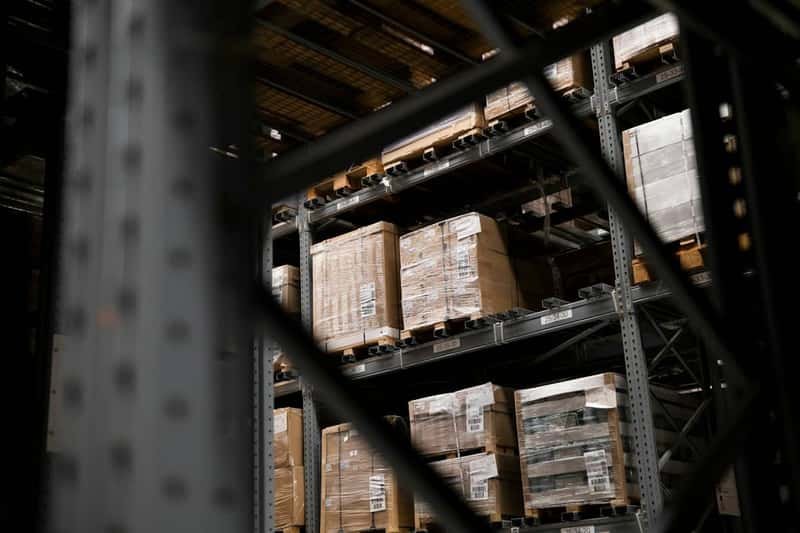
What this category covers
- Packaged dry goods — snacks, cereal, pasta, baking ingredients, canned and jarred foods.
- Beverages — bottled water, canned and bottled soft drinks, shelf-stable juice and drink mixes.
- Pet food — bagged kibble, canned pet food and treats.
- Food packaging and inputs — empty cartons, film and dry ingredients moving into a plant.
Beverages weigh out before they cube out
This is the single biggest planning difference in food and beverage. A van of light snacks fills the floor long before it gets heavy. A van of bottled water or canned soda does the opposite: it reaches the legal gross weight with floor space still empty. Two practical consequences:
- Your pallet count per load is set by weight, not by the 26 positions on the floor. Send actual pallet weights, including the pallet and wrap.
- Weight has to be distributed, not just under the total. Heavy pallets bunched at one end can put an axle group over its limit even when the gross is legal. Loading pattern matters.
Usable payload varies with the tractor and trailer, so it should be confirmed per load rather than assumed as a fixed number.
Worked example (illustrative): bottled water by weight
Water weighs about 8.33 lb per U.S. gallon (USGS). A case of twenty-four 16.9 fl oz bottles holds 24 × 16.9 = 405.6 fl oz, or 3.17 gallons, so about 26.4 lb of water per case before the plastic and cardboard. Assume 100 cases per pallet (an assumption for illustration; take the real count from your pallet pattern): 2,640 lb of water per pallet. Against the 42,000–45,000 lb payload range the pallet calculator uses for a 53 ft van, 42,000 ÷ 2,640 = 15.9, so the van is weight-bound at 15 pallets on the water alone, using 15 of its 26 floor positions (58%). Packaging and the pallet itself push the real figure lower, which is why the weight per pallet, not the 26 positions, sets the count.
Clean, odor-free and food-grade trailers
Food receivers can and do reject trailers. A previous load of chemicals, a lingering odor, a wet floor, a hole in the roof or pest activity is enough. Packaged food can pick up odors through cardboard, and pet food is no different. On food loads, your requirements should go to the carrier in writing, such as:
- Trailer swept, dry and free of odor, debris and pest activity before loading
- No prior hazardous or strong-smelling cargo, if your policy restricts it
- Roof, walls and doors intact so the load stays dry
- Seal applied at pickup, with the seal number recorded on the bill of lading
Your team should still inspect the trailer at the dock. If it doesn't meet your standard, reject it — that's the point of putting the standard in writing.
FSMA sanitary transportation, in general terms
The FDA's rule on sanitary transportation of human and animal food sets expectations for shippers, loaders, carriers and receivers on many food shipments, and it has exemptions — some fully packaged, shelf-stable products among them. The rule's definition of "transportation operations" (21 CFR 1.904) leaves out food that is completely enclosed by a container, except a food that requires temperature control for safety, so a sealed shelf-stable can and an unwrapped bulk ingredient are treated differently. Whether and how it applies depends on your product, packaging and role. No one should claim every load is covered or exempt. Your written sanitary and segregation requirements should be confirmed on each load.
Lot codes and traceability
Food shippers often need lot or batch codes recorded against each shipment so product can be traced if there's ever a question. If your receiver needs lot numbers on the bill of lading or a packing list, make it part of the shipping instructions so the paperwork reflects it.
Pet food bags and pallet stability
Large bags of kibble are soft, slippery and heavy, and a poorly wrapped pallet can lean or collapse on the road. Good stretch-wrap, corner boards, slip sheets between layers and load bars to stop pallets sliding all help. Bag size, layers per pallet and whether pallets stack should all be in the shipping details.
Planned coverage once we open: Hotshot and flatbed freight nationwide (lower 48). Dry van truckload across North Carolina, South Carolina, Georgia, Virginia, Florida, Alabama and Tennessee. USA only — no cross-border, no drayage, no rail, no temperature-controlled freight.
Delivering to a grocery or retail DC? See our Retail DC Delivery Guide, or tell us about your freight and we'll contact you the day we open.