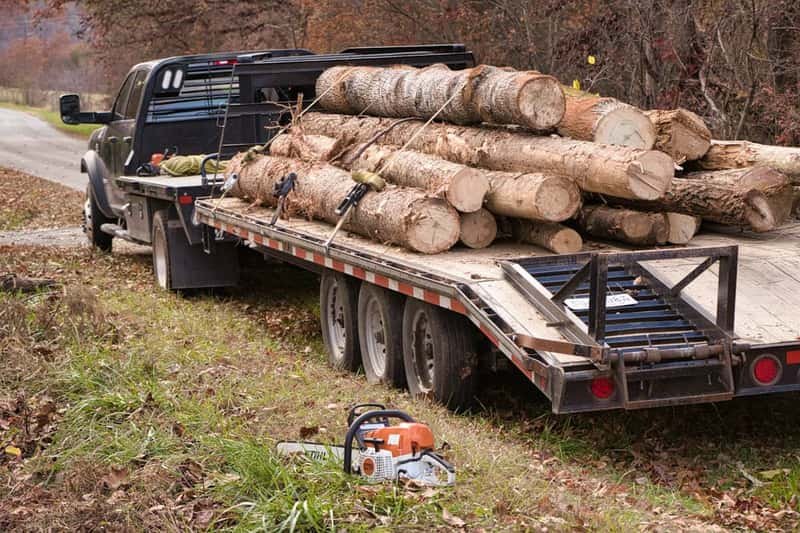
Hot shot freight rates, also searched as hotshot shipping cost or the rate per mile for expedited flatbed, are where shippers most often see very different prices for what looks like the same move. Part of that is real: a 40-foot gooseneck behind a one-ton dually is a small, scattered fleet, and where the nearest truck happens to be today changes the cost. Part of it is how the numbers get published. Most "hotshot rate" pages are written for drivers deciding which loads to accept, so the figure they call the rate is what the truck is paid, not what a shipper's invoice says.
This guide takes the price apart: the blocks every hotshot price is built from, the gap between carrier pay and shipper price, the dated ranges that named public sources actually publish, and a 410-mile example with every step of the arithmetic shown. If you are new to the equipment, start with our hotshot freight page; the cost to ship a skid steer guide applies the same mechanics to one common load.
How a hotshot price is built
A hotshot price usually arrives as a single number. Underneath it are the same few blocks every time, and knowing them is what lets you compare two prices that look nothing alike.
- Linehaul. The charge for the loaded miles: the driver's time, the truck and trailer payments, insurance, maintenance and the carrier's profit. It is quoted per loaded mile on longer runs. Fuel is either inside it (an "all-in" rate) or shown as a separate line.
- Minimum charge. On short runs a flat figure replaces the per-mile math, because loading, securing and unloading take the same time whether the drive is 40 miles or 140.
- Deadhead. The empty miles to reach your pickup and, on lanes with little outbound freight, after delivery. Usually folded into the linehaul rate rather than shown.
- Fuel. Inside an all-in rate, or a separate fuel surcharge tied to a published diesel index; O Trucking's October 2026 guide describes both practices.
- Accessorials. Detention, truck-ordered-not-used (TONU) fees, layover, tarping, permits, loading help, after-hours or weekend work. Each is its own line when it applies.
- Margin. When a broker or another intermediary books the truck, the difference between what the shipper pays and what the carrier is paid. Booked directly with a carrier, there is no separate margin; it sits inside the carrier's own rate.
Carrier pay vs. what a shipper pays
Most published hotshot rates are written for drivers. FreightWaves, Truckstop and O Trucking all address owner-operators deciding which loads to take, so their per-mile figures describe what a load pays the truck. A shipper's invoice sits above that number whenever an intermediary is involved, and above it on any move with accessorial charges. O Trucking's own guide (updated Oct 4, 2026) shows the gap from the carrier's side: it lists standard hotshot loads at $1.00–$2.00 per mile and direct-shipper freight, which carries no broker margin, at $1.50–$3.00 or more.
Two other things make driver-side and shipper-side numbers look further apart than they are:
- Which miles. FreightWaves (May 18, 2026) calculates pay per mile as the payout divided by total miles driven, without saying whether empty miles count. Shipper prices are almost always expressed per loaded mile. The same truck-day therefore reads as a lower number in a driver guide than on a shipper's invoice.
- When. Truckstop's rate guidance is dated December 23, 2024, and its fuel example uses fuel at $2.50 a gallon. EIA's U.S. average diesel price is $6.276 for the week of October 19, 2026. A rate sheet built on old fuel math is not describing today's costs.
If a broker books your load, you are entitled to see the split. Under 49 CFR 371.3, a broker must keep a record of each transaction showing, among other things, the originating motor carrier's name and registration number, the compensation the broker received and the freight charges it collected, and each party to a brokered transaction has the right to review that record. Few shippers ask. It is still worth knowing when a price looks far above the carrier-pay ranges below.
Published hotshot rate ranges, 2024–2026
These are the figures named public pages published when we opened them on October 18, 2026. Each row says whether the source describes carrier pay or a shipper-facing price. None of the figures is ours, and none comes from DAT: we link to DAT Trendlines for weekly direction but do not republish its figures.
| Source and date | Published range (per mile unless noted) | Carrier pay or shipper price | What to note |
|---|---|---|---|
| FreightWaves, May 18, 2026 | Most loads $1.50–$2.00; complex, urgent or specialized jobs $3.00 or more; simple runs in competitive markets closer to $1.00 | Carrier pay (written for owner-operators) | Per-mile pay is calculated over total miles driven. |
| O Trucking, published Feb 20, 2026, updated Oct 4, 2026 | Standard $1.00–$2.00 (its quick answer says $1.50–$2.00); expedited $2.00–$3.50; oversize or permitted $2.50–$5.00+; direct-shipper freight $1.50–$3.00+; same-day local runs under 100 mi a flat $200–$800 | Carrier gross revenue | Puts most operators' cost at $0.80–$1.50 per mile; notes many broker loads are quoted all-in with fuel. |
| Sims Global Solutions, July 19, 2026 (modified July 26) | Entry-level flatbed $1.00–$1.75; full flatbed or regional $1.75–$2.50; expedited $2.50–$3.00+; oversize or permitted $2.50–$3.50+ | Not stated (a freight and logistics company's guide addressed to shippers and operators) | Its key takeaways give basic loads as $1.00–$1.25, its body $1.00–$1.75. |
| FreightRun, 2026 Fleet Benchmarks | Overall $1.50–$3.50; utility or flatbed to 7,000 lb $1.50–$2.25; gooseneck to 16,500 lb $2.00–$3.00; step deck to 20,000 lb $2.50–$3.50; urgent, short-haul or oversized $4.00+ | Shipper-facing (a freight marketplace's quote page) | Lists deadhead as a quote factor; ramps, straps or tarps add accessory fees; same-day, weekend and after-hours work carries surcharges. No amounts given for either. |
| Truckstop, Dec 23, 2024 | Generally $1.50; urgent loads up to $2.00; a typical minimum of $1.00–$1.25; partial loads lower | Carrier pay (load-board guidance to drivers) | The oldest row here; its fuel example assumes $2.50-a-gallon fuel. |
| DAT Trendlines, free, updated weekly | Link only: weekly direction of national average flatbed spot rates (including fuel surcharges); no hotshot-specific series | Market index | Use it for direction week to week; we do not republish its figures. |
Read the rows side by side and two bands appear. Carrier pay for standard, non-urgent hotshot freight clusters around $1.50–$2.00 per mile (FreightWaves, Truckstop and the upper half of O Trucking's standard band). Shipper-facing gooseneck benchmarks sit around $2.00–$3.00 per mile (FreightRun, 2026; it does not say loaded or total miles). That is consistent with the carrier-pay band once deadhead, accessorials and, where there is one, a margin are added. Expedited and oversize work sits above both. Our Freight Market Pulse notes what moved in the wider market each week, with dates.
Minimum charges: why short runs don't price by the mile
A hotshot truck sells days, not miles. A 60-mile move still takes the driver's morning: the empty run to your dock, loading and chaining, the drive, unloading, and the trip toward the next load. So on short runs, under roughly 100–200 miles, carriers often charge a flat minimum (Beardown, Feb 2026). O Trucking (updated Oct 4, 2026) lists same-day local deliveries under 100 miles at a flat $200–$800 to the truck, warns operators that a 180-mile load at $3.50 per mile ($630) may not cover a day's costs, and advises them to set a minimum charge for the day. On the shipper side, Beardown Logistics (Feb 10, 2026) says minimum-haul fees of about $400–$600 are common for trips under 100–200 miles.
The table shows what a flat $600 minimum, inside both of those ranges, works out to per loaded mile. It is an illustration, not a market figure.
| Loaded miles | $600 ÷ miles | Per-mile equivalent |
|---|---|---|
| 50 | $600 ÷ 50 | $12.00 |
| 100 | $600 ÷ 100 | $6.00 |
| 150 | $600 ÷ 150 | $4.00 |
| 200 | $600 ÷ 200 | $3.00 |
| 300 | $600 ÷ 300 | $2.00 |
Read down the last column: on a $600 minimum, the per-mile equivalent falls into the $2.00–$3.00 shipper benchmark band only at about 200–300 miles; on a $400 minimum, that crossover comes at about 133–200 miles ($400 ÷ 133 = $3.01; $400 ÷ 200 = $2.00). The flat minimum is why prices for a 60-mile and a 160-mile move can come back almost identical. If your short move can wait for a truck already passing through, a hotshot partial splits that day between shippers.
Deadhead: the empty miles inside the rate
Hotshot units are spread thin, so the nearest available truck may be an hour or two away. Those empty miles cost the carrier real money (O Trucking, Oct 2026, puts empty miles at $0.30–$0.50 per mile in fuel and wear), and a carrier judges a load by what it pays across every mile driven, loaded or not:
Effective rate = total pay ÷ (loaded miles + empty miles)
Both driver guides that work the formula show how fast it bites. O Trucking: a $1,000 load of 400 miles with 200 empty miles pays $1.67 per mile driven, not $2.50. Sims Global Solutions (July 2026): 200 loaded miles at $3.00 is $600, and with 150 empty miles that is $1.71 per mile driven. From the shipper's side, the same arithmetic runs in reverse. To earn $2.00 on every mile driven, a carrier that has to deadhead 150 miles to a 200-mile load needs $700, which is $3.50 per loaded mile. The same load with the truck 20 miles away needs $440, or $2.20 per loaded mile.
Deadhead also runs after delivery. A load that ends somewhere with little freight going back out (rural sites, oilfield country, the far end of a long lane) leaves the driver to cover the empty run home, and that cost lands in the price. O Trucking advises operators to ask brokers to cover deadhead, using 150 empty miles to a pickup as its example. It rarely appears as its own line on a shipper's price; it shows up as a higher per-mile rate.
Fuel: the biggest variable cost
EIA's weekly retail survey put the U.S. average on-highway diesel price at $6.276 per gallon for the week of October 19, 2026 (EIA Gasoline and Diesel Fuel Update; EIA dates each week by its Monday). Fuel per mile is simply the price divided by the truck's miles per gallon: at the 9 mpg towing assumed in every worked example on this site, $6.276 ÷ 9 = $0.70 per mile; at 8 mpg, $0.78. Truckstop's 2024 example (fuel at $2.50 a gallon, 15 mpg) works out to about $0.17 per mile, so on these assumptions old fuel math understates today's cost by more than 50 cents a mile.
Fuel is not the same everywhere. The table is EIA's regional on-highway diesel snapshot for the week of October 19, 2026, with the fuel cost per mile at the same 9 mpg. It is a dated snapshot, kept as published: the guides on equipment costs link here for it instead of repeating it, and the national figure above is the one that follows the week.
| EIA region | Diesel, $ per gallon (week of October 19, 2026) | Fuel per mile at 9 mpg | Includes |
|---|---|---|---|
| U.S. average | $6.276 | $0.70 | All regions |
| East Coast (PADD 1) | $5.984 | $0.66 | New England, Central Atlantic and Lower Atlantic combined |
| New England | $6.470 | $0.72 | CT, MA, ME, NH, RI, VT |
| Central Atlantic | $6.508 | $0.72 | DE, DC, MD, NJ, NY, PA |
| Lower Atlantic | $5.740 | $0.64 | FL, GA, NC, SC, VA, WV |
| Midwest | $6.352 | $0.71 | IA, IL, IN, KS, KY, MI, MN, MO, ND, NE, OH, OK, SD, TN, WI |
| Gulf Coast | $5.903 | $0.66 | AL, AR, LA, MS, NM, TX |
| Rocky Mountain | $6.422 | $0.71 | CO, ID, MT, UT, WY |
| West Coast | $7.394 | $0.82 | AK, AZ, CA, HI, NV, OR, WA |
| California | $8.242 | $0.92 | California alone |
The spread matters on long lanes: a truck that fuels in California pays $8.242 against $5.740 in the Lower Atlantic, a difference of about $2.50 a gallon, or about $0.28 a mile at 9 mpg. Region membership follows EIA's own map of states by region.
Prices handle fuel one of two ways. Many broker loads are quoted all-in with fuel included; some direct-shipper and contract loads add a separate fuel surcharge tied to a published diesel index (O Trucking, Oct 2026). A common surcharge structure uses a base price, or peg, and charges the difference per mile. As an illustration only: with a $4.00 peg and a truck assumed to get 9 mpg, the week's EIA average gives ($6.276 − $4.00) ÷ 9 = $0.253, about 25 cents per mile, on top of the linehaul. Ask which way a price handles fuel. A linehaul-only number that looks low may not be once the surcharge is added.
Accessorials: the lines after the linehaul
Accessorial charges pay for work and time beyond the drive itself. The ones that come up on hotshot moves:
- Detention. Free time at pickup and delivery, then an hourly charge. Hotshot drivers earn by the turn, so waiting costs them a large share of the day.
- TONU (truck ordered, not used). A flat fee when a load cancels after the truck is dispatched or has arrived.
- Layover. A daily charge when a delivery slips to the next day for reasons outside the driver's control.
- Tarping. Beardown Logistics (Feb 2026) lists tarp fees of about $100–$200, shipper-side.
- Loading help. Winching or lifting equipment that cannot drive on: $100–$500 (Beardown, Feb 2026, shipper-side).
- Driver-supplied equipment. FreightRun says ramps, heavy-duty straps or weather tarps the driver brings add accessory fees, without giving amounts.
- After-hours, weekend and same-day work. FreightRun notes surcharges for each.
- Permits and escorts. For loads over legal width or height; O Trucking's oversize band is $2.50–$5.00+ per mile to the truck (Oct 2026).
None of the pages above publishes a detention or TONU rate, and both vary by carrier. What to ask for is the free time at each end, the hourly rate after it, and the TONU amount and what triggers it, all in writing before the truck is dispatched. Our freight accessorial charges guide covers the full list across trailer types.
Urgency: what "today" costs
Every source that splits out urgent freight prices it higher. O Trucking (Oct 2026, carrier gross) lists expedited, time-critical hotshot loads at $2.00–$3.50 per mile against $1.00–$2.00 for standard; Sims Global Solutions (July 2026, basis not stated) gives expedited as $2.50–$3.00+; FreightWaves (May 2026, carrier pay) says urgent or complex jobs reach $3.00 or more; and FreightRun notes surcharges for same-day dispatch, weekend pickups and strict after-hours delivery deadlines.
The premium is not arbitrary. An urgent load takes whichever truck is closest, however far that is, and the driver gives up whatever load was planned next. The driver's clock is fixed too: under 49 CFR 395.3, a property-carrying driver needs 10 consecutive hours off duty before driving, may drive at most 11 hours, may not drive beyond the 14th consecutive hour after coming on duty, and must take a 30-minute break after 8 cumulative hours of driving. A same-day 400-mile delivery needs a truck no more than an hour or so from the pickup, freight loaded by mid-morning and a receiver open late. Our nationwide hotshot page has transit bands by distance.
What lowers a hotshot price
- A flexible pickup window. Beardown Logistics (Feb 2026) says a 3- to 5-day window lets a carrier fit your load around others, and that booking about two weeks out in peak season avoids paying for a truck in a hurry.
- Backhaul lanes. Freight markets are lopsided: some areas ship out far more than they receive, so trucks arrive loaded and leave looking for anything. A load running in the direction trucks already need to go is a backhaul for the carrier, and it prices lower because the alternative is driving empty. Ask which way the truck was headed.
- Dock and site readiness. Freight staged and labelled, a forklift and operator waiting, a named contact, posted hours and the bill of lading ready. A short turn takes detention risk out of the price and makes your freight the load a driver wants.
- An honest weight and size. A load near a non-CDL truck's payload limit (roughly 8,000–10,000 lb; see our hotshot page) narrows the pool of trucks that can take it. Weigh it with the crate and skid.
- Packaging that needs no tarp. Crated or shrink-wrapped freight skips the tarp line and the time it takes.
- Sharing the deck. If your freight uses a fraction of a 40-foot deck, a partial splits the truck-day between shippers; Truckstop's guidance notes partial loads are priced lower.
How to read a hotshot quote
Two prices for the same move are only comparable once they are broken into the same lines. The sample below is illustrative and uses the worked example's figures; the right-hand column is what to check on any price you receive.
| Line | Sample entry (illustrative) | What to check |
|---|---|---|
| Linehaul | 410 loaded mi, $940 | Loaded miles or all miles? Is fuel inside it? Divide the total price by loaded miles to compare like with like. |
| Fuel | Included | If separate, which index (EIA's weekly survey is the usual public one), what peg, and what mpg. |
| Minimum | Not applicable at 410 mi | On short runs the minimum replaces the mileage. It should be a stated figure. |
| Free time and detention | 2 hours at each end, then an hourly rate | Both ends, in writing, with the hourly rate stated. |
| TONU | Flat fee if cancelled after dispatch | The amount and the trigger. |
| Accessorials | Tarp, $150 | Every extra you expect is listed, so none appears on the invoice for the first time. |
| Equipment | 40 ft gooseneck, payload confirmed above 7,200 lb | Payload confirmed against your real weight, deck length against your longest piece. |
| Service | Exclusive; pickup Tuesday 7–9 am; delivery Tuesday evening or Wednesday 8 am | Exclusive or partial, the pickup window, and what happens if the receiver is closed on arrival. |
| Who moves it | Carrier name and USDOT number | Check authority and insurance in the FMCSA Motus public search and the safety record on SAFER (steps in the hotshot guide); if a broker is involved, 49 CFR 371.3 lets you review the transaction record. |
A price far below the carrier-pay ranges above is a warning, not a bargain: fuel alone on the worked example is about $328, so a price near that figure means a truck that may not show, or a partial sold as an exclusive.
Worked example (illustrative arithmetic, not a price)
The load: one crated industrial pump skid with its control panel, 7,200 lb with the crate, 16 ft long, forklift at both ends. The shipper wants a tarp to keep the panel dry. From a plant near Raleigh, NC to a jobsite outside Atlanta, GA: about 410 loaded miles. The nearest available hotshot is 60 miles from the plant. Pickup on one named morning. Every dollar figure below is arithmetic on a cited per-mile range plus a labelled assumption; none is a price from Averstone Logistics, and none is a price for any real move.
| Step | Arithmetic | Result |
|---|---|---|
| 1. Miles driven | 60 empty + 410 loaded | 470 mi |
| 2. Carrier linehaul at $2.00 per mile driven, the top of FreightWaves' $1.50–$2.00 carrier-pay band (May 2026) | 470 × $2.00 | $940, or $940 ÷ 410 = $2.29 per loaded mile |
| 3. Fuel inside that linehaul, at an assumed 9 mpg and EIA's $6.276 (week of October 19, 2026) | 470 ÷ 9 = 52.2 gal; 470 ÷ 9 × $6.276 | $327.75, call it $328 |
| 4. Rest of the linehaul: driver, truck, insurance, carrier profit | $940 − $328 | $612 |
| 5. Accessorial: tarp, midpoint of Beardown's $100–$200 (Feb 2026, shipper-side) | ($100 + $200) ÷ 2 | $150 |
| 6. Carrier receives | $940 + $150 | $1,090 |
| 7. Intermediary margin, an assumption for illustration | $1,200 − $1,090 | $110 (9.2% of the price) |
| 8. Illustrative total a shipper would see | $1,090 + $110 | $1,200, or $1,200 ÷ 410 = $2.93 per loaded mile |
Sanity check: FreightRun's shipper-facing gooseneck benchmark of $2.00–$3.00 per mile (2026) gives 410 × $2.00 = $820 to 410 × $3.00 = $1,230. The $1,200 lands near the top of that band because of the 60 empty miles and the tarp.
What moves it:
- A truck 10 miles away instead of 60: 420 × $2.00 = $840 linehaul, so $840 + $150 + $110 = $1,100, $100 less.
- No tarp (panel crated or wrapped): $1,200 − $150 = $1,050.
- Must move today: O Trucking's expedited band of $2.00–$3.50 per mile (Oct 2026, carrier gross) gives 470 × $2.00 = $940 to 470 × $3.50 = $1,645 to the truck before the tarp or any margin, up to $1,645 − $940 = $705 above step 2. With the same tarp and margin, the shipper would pay up to $1,645 + $150 + $110 = $1,905.
- The same skid going 90 miles: the minimum sets the price. At Beardown's $400–$600 minimum-haul range, that is $400 ÷ 90 = $4.44 to $600 ÷ 90 = $6.67 per loaded mile.
Timing: 470 miles at an assumed 50 mph average is 9.4 hours of driving, inside the 11-hour limit of 49 CFR 395.3. Add an hour to load, an hour to unload and the 30-minute break, and the driver is 11.9 hours into the 14-hour window. A driver who comes on duty at 6 am reaches the plant at about 7:10, rolls loaded by about 8:10 and arrives around 5 pm. A jobsite that closes at 3 pm makes it a next-morning delivery.
To bracket your own move, our free hotshot estimator gives estimated road miles, transit days and the fit check for two ZIP codes; it shows no price while our FMCSA broker registration is pending.
Where this applies
Hotshot and flatbed freight nationwide (lower 48). Dry van truckload across North Carolina, South Carolina, Georgia, Virginia, Florida, Alabama and Tennessee. USA only — no cross-border, no drayage, no rail, no temperature-controlled freight. Have a hotshot load coming up? Tell us about your freight: the lane, the weight and dimensions, and how flexible the dates are. We answer every message within 30 minutes, Mon–Fri 8am–5pm ET, and within 6–12 hours at other times.